About the project

Why do we speak of 'the Commons'?

Block interiors, or 'commons', reveal how communities organized, produced, and coexisted in the past.

The term refers to the study of those spaces characteristic of the Hispanic colonial city that served fundamental functions for collective use.

They were multifunctional spaces with both private and collective access. In them, crops were cultivated, food was processed, resources were stored, and waste was managed. All of these activities left visible marks on the urban landscape.

For this reason, the commons preserve traces of daily life and the organizational forms of the communities that inhabited them. These places allow us to see an urban “microcosm” filled with human and ecological interactions that are sometimes absent from the historical record.

What is its significance?

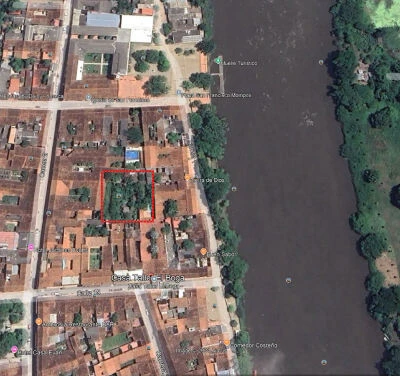
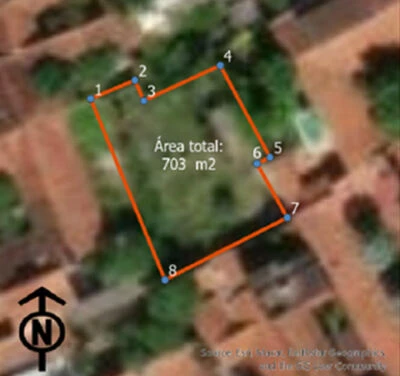
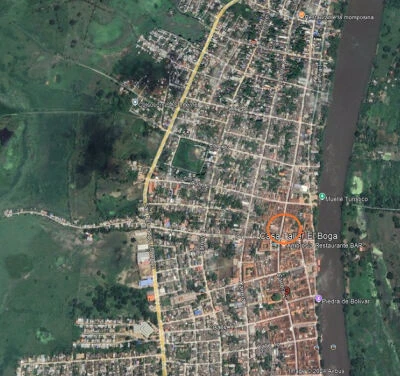
Location of the Research Area at Casa Taller El Boga in the Context of Mompox

Today there are almost no places left to study the “commons” as the advance of urbanization across the Americas has erased many of them. Nevertheless, the ancient colonial block interiors preserve unique traces of social, economic, and ecological relations that are no longer visible in everyday life.

Examining them across time allows us to better understand the complexity and continued relevance of communal economies, ecological interactions, resource use, and related aspects.

For this reason, the research process and the archaeological record at El Boga allowed us to understand how communal economies and ways of life functioned in the past, what remains of them today, and which social dynamics have changed up to the present day.

What is it about?

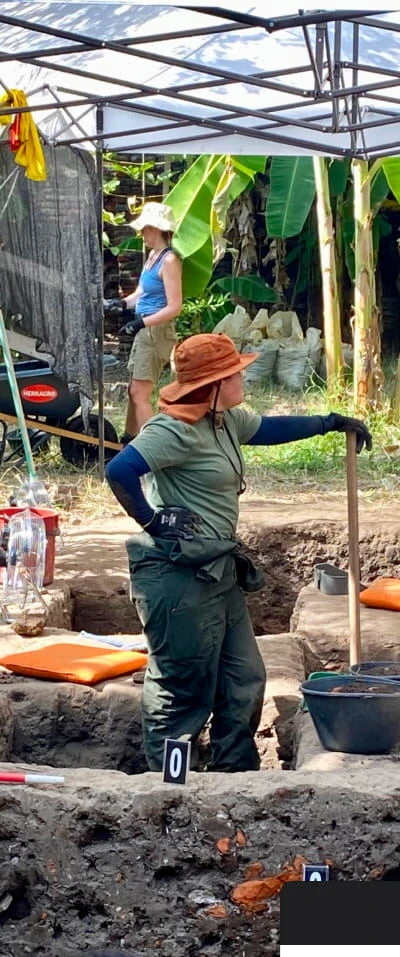
Through an interdisciplinary study, we seek to reconstruct how the “commons” emerged, how their dynamics changed over time, and what lessons they offer for the present and future. To this end, archaeological excavations were carried out on the grounds of the current Fundación Casa Taller El Boga, located in Mompox, a city that during the colonial period was deeply connected to the vast global trade networks that traversed the most extensive river system in northern South America.

What are the project's objectives?

  1. To contribute to the current understanding of the origin, development, and future possibilities of block interiors or commons in the Hispanic colonial city.
  2. To document the archaeological potential of these commons in the inland port of Mompox.
  3. To generate narratives about the transformation that traditional means of subsistence have undergone from their formation during the colonial period to their virtual extinction in modern times.
  4. To evaluate the applicability of these narratives to memory-building processes within the socially, economically, and environmentally complex framework of contemporary Colombia.

Research lines

1. Archaeology

Drawing on analyses of the material culture recovered from excavations at the site, this line examines how the use and management of the “commons” under investigation at El Boga have changed over time, with the aim of understanding their distinct phases of occupation and transformation.

2. Archival work and documentary review

This line conducts a critical review of primary sources (historical records, maps, and plans) held in local, national, and international repositories in cities such as Mompox, Bogotá, and Seville (Spain), in order to reconstruct the social dynamics of Mompox during the colonial period and their direct or indirect influence on the use and configuration of these spaces in the past.

3. Ethnography

This line focuses on collecting oral testimonies about the current use and management of urban commons as a means of understanding changes across time.

4. Cross-cutting application: knowledge transfer and community outreach

Through the dissemination of research findings to the community, this line seeks to emphasize the value of the results in order to promote engagement with the history of Mompox. To this end, in cooperation with Casa Taller El Boga, various academic and artistic initiatives are promoted across different fields.

Methodology

How can we achieve these objectives?

Reconstructing the daily life of past communities — how they lived, how they fed themselves, or how they managed water — is a complex undertaking, particularly when written records are scarce. This requires interdisciplinary research that, as in the case of El Boga, combines archaeology, anthropology, geography, history, and philosophy.

To implement this methodology, the different areas draw on techniques specific to each discipline including: excavation with stratigraphic control and stylistic analysis of material remains; transcription and analysis of documents from the conquest and colonial periods; structured and semi-structured interviews, among others.

Would you like to know how it has been unfolding?

Find out in the section "Research process - Project history"