Understanding the commons: a social archaeology of urban life in the port of Mompox, Colombia.
Proyect number: IZSTZ0_223853
What began with planting a tree ended in an interdisciplinary investigation into the "commons."
How did this come about?
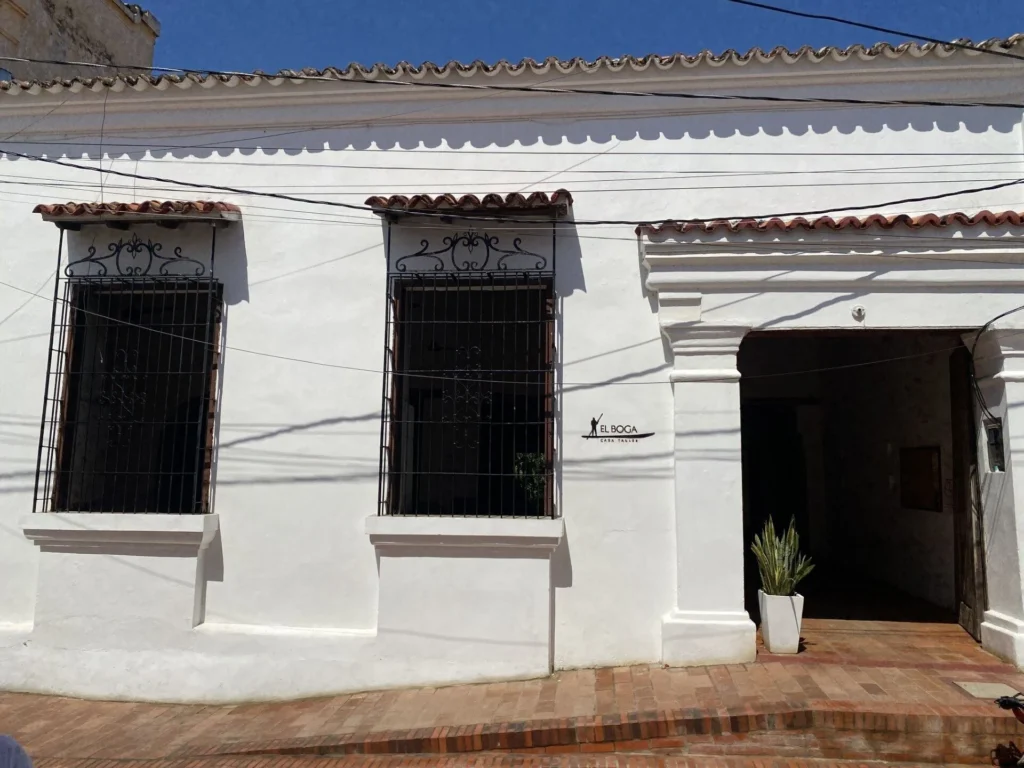
These photographs correspond to Casa Taller El Boga.
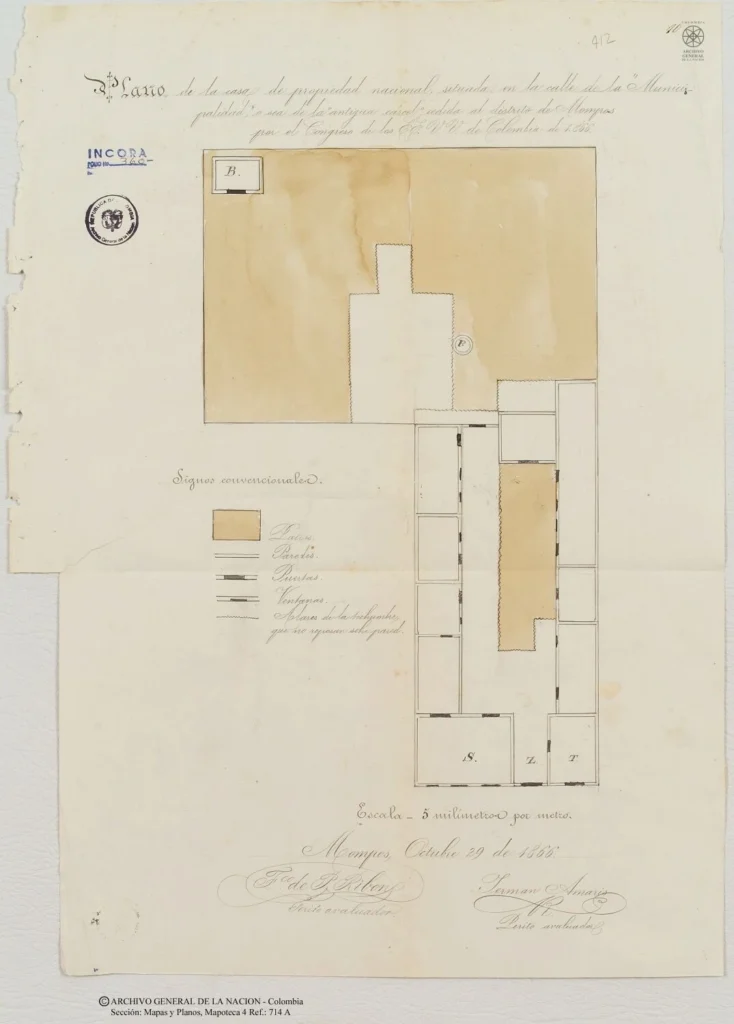
The floor plan image was provided by team researcher Alberto Escovar.
“Reimagining the commons: a social archaeology of urban life in the port of Mompox, Colombia” is a collaborative research project between the University of Zurich and Universidad de los Andes, made possible by funding from a Swiss National Science Foundation grant.
The discovery of archaeological evidence in the heart of Mompox opened a window into the past and into the block interiors, or “commons.
What happened?
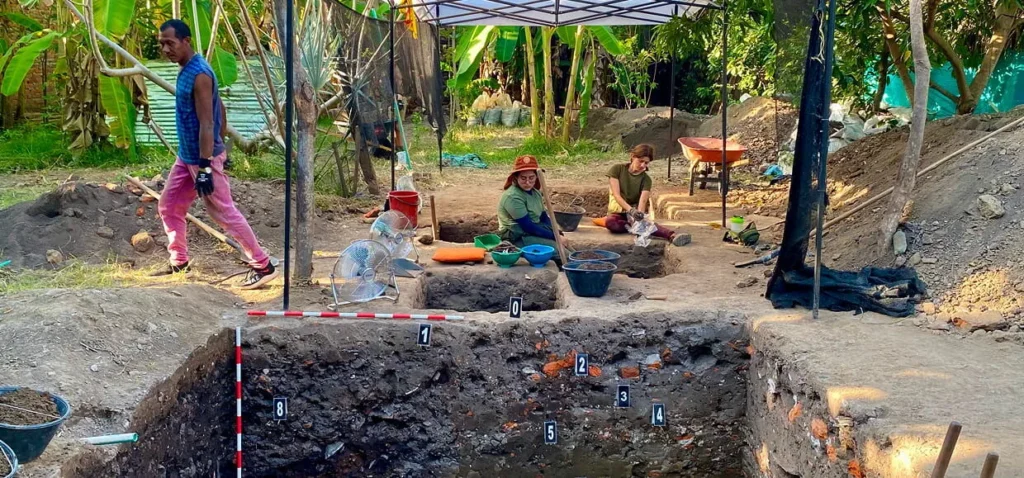
Archaeological deposits of more than 400 years were uncovered in the courtyard of Casa Taller El Boga!
The research was carried out on the grounds of the “Fundación Casa Taller El Boga,” a place that became a social laboratory, where national and international researchers, anthropology and archaeology faculty and students traveled to Mompox — a UNESCO World Heritage Site — and there joined a group of locals to work tirelessly in the collection, processing, and care of objects that hold relevant information for understanding life in the past.
The project is ongoing and promises to yield valuable information on communal economies in general and on the complex networks of social, economic, and ecological relations that frame the block interior at El Boga, thus contributing to the development of contemporary archaeology in Colombia and Latin America.
To learn more about this 400-year journey into the past and discover how this project connects us to the present, explore the following links
Who are we?
We are an international team of researchers and students from the University of Zurich, Universidad de los Andes, Universidad Javeriana, University of Cambridge, independent researchers, and members of the Mompox community.
We explore block interiors, or “commons” to understand how economies, relationships, and daily practices functioned in the colonial city. The archeological site in El Boga allows us to reconstruct these lost dynamics and their present-day relevance.
What began as an accidental discovery evolved into a formal investigation involving excavations in Mompox, consultation of historical archives, and laboratory analysis. Each stage reveals new clues about more than four centuries of urban history.
El Boga became a space where archaeology and daily life intertwine. Researchers, students, and the community build knowledge together, sharing experiences, questions, and findings in a true social laboratory.
The project continues to advance with new phases of analysis, community collaboration, and promising results. In the coming months, opportunities and open calls will be announced to bring more voices into this research.