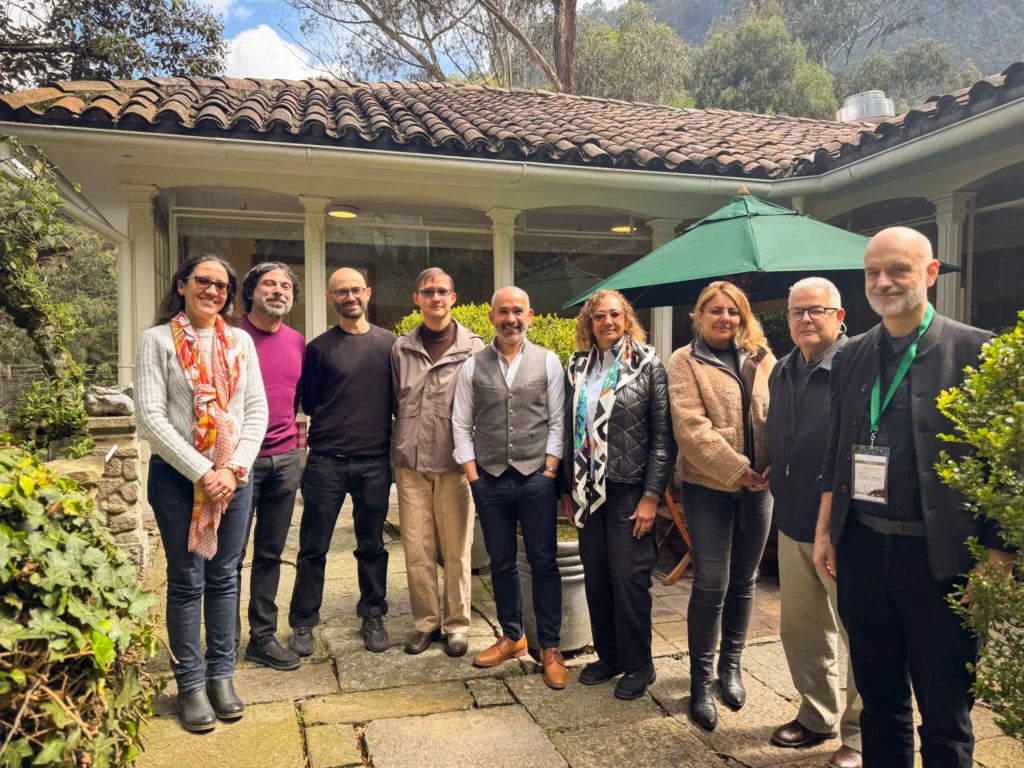
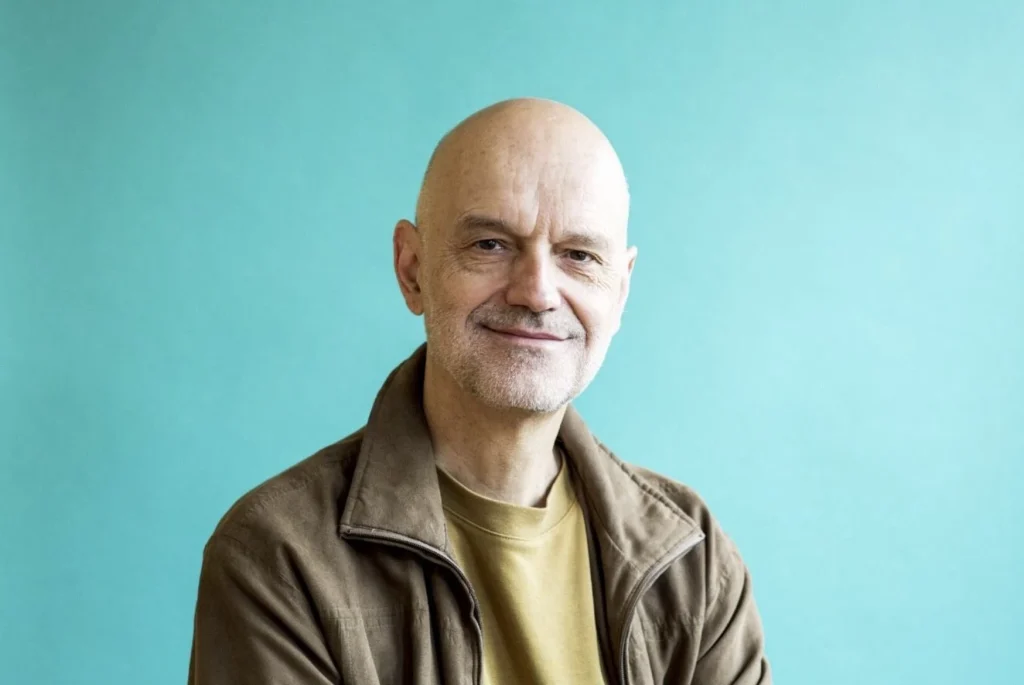
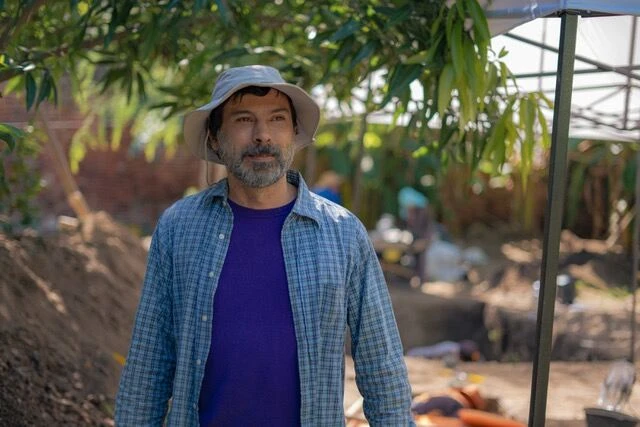
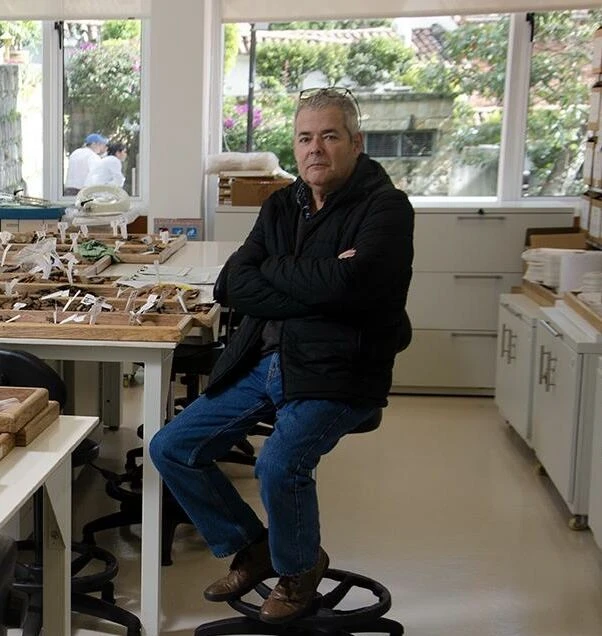
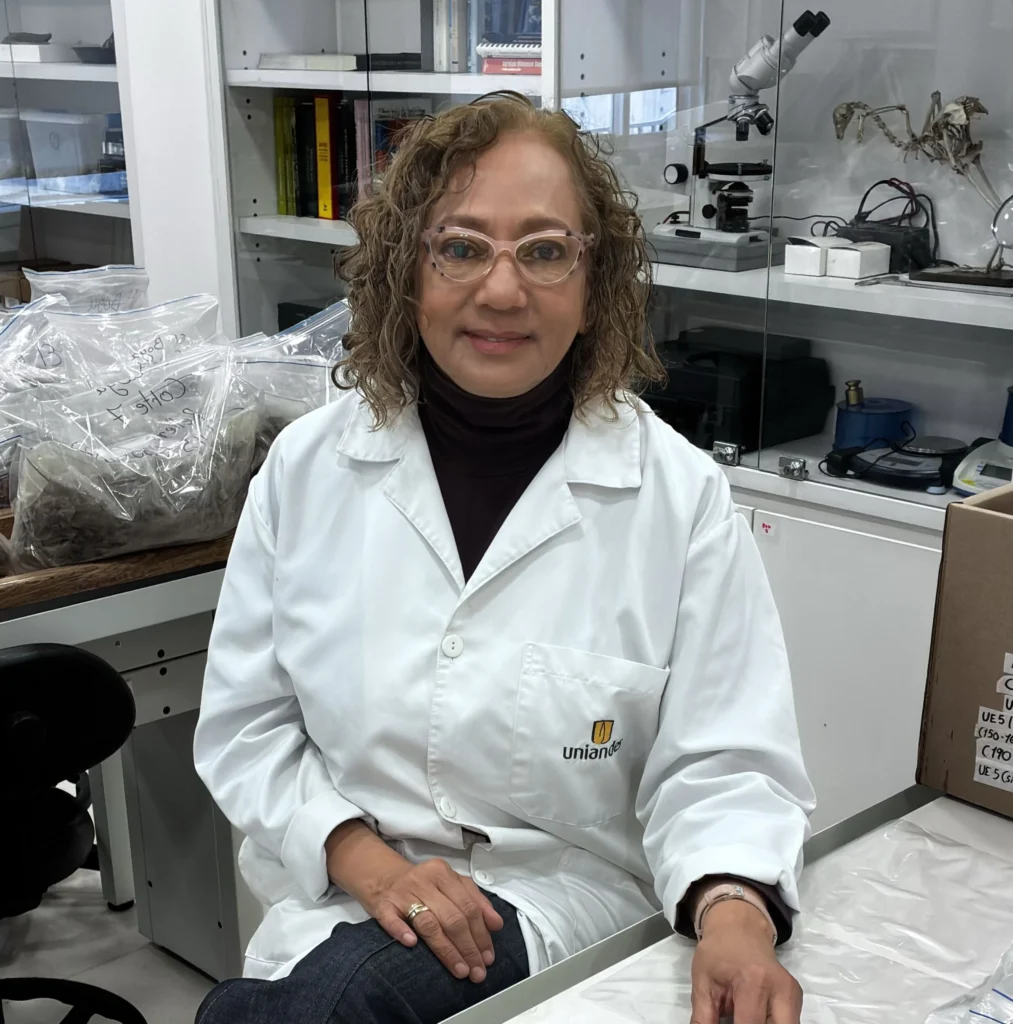
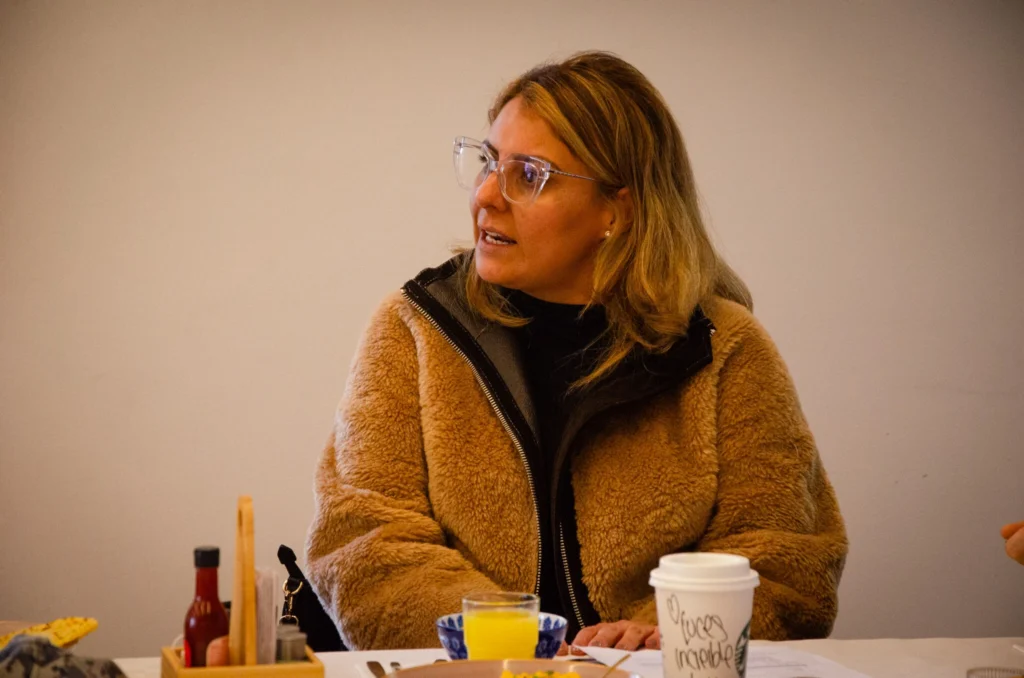
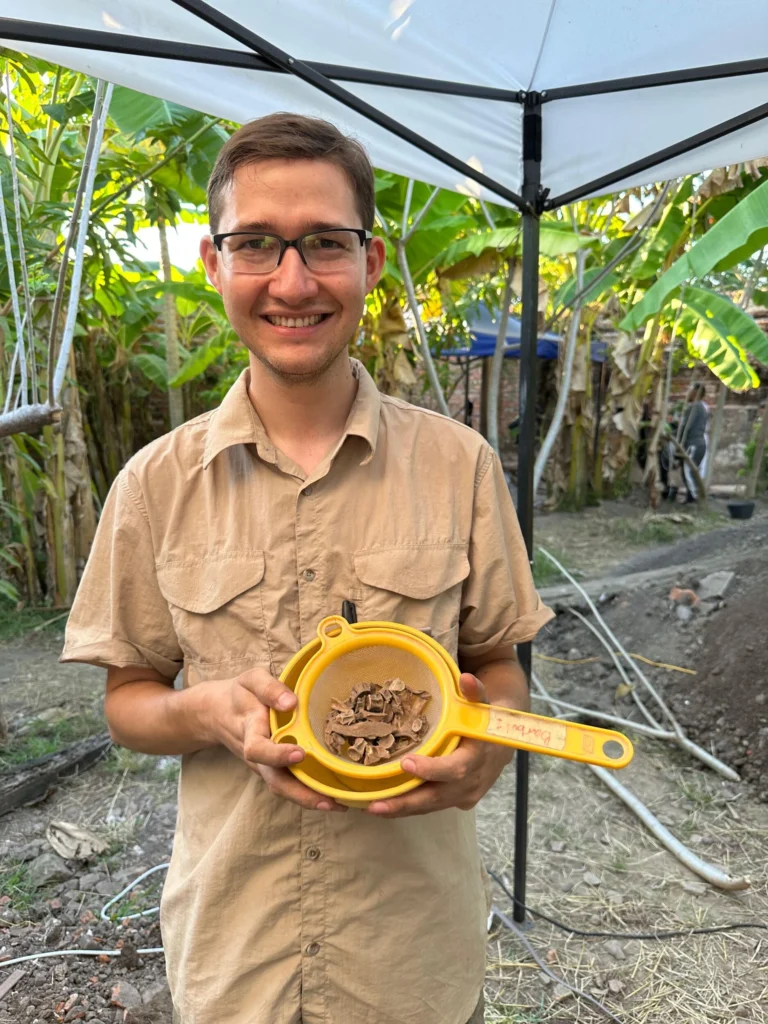
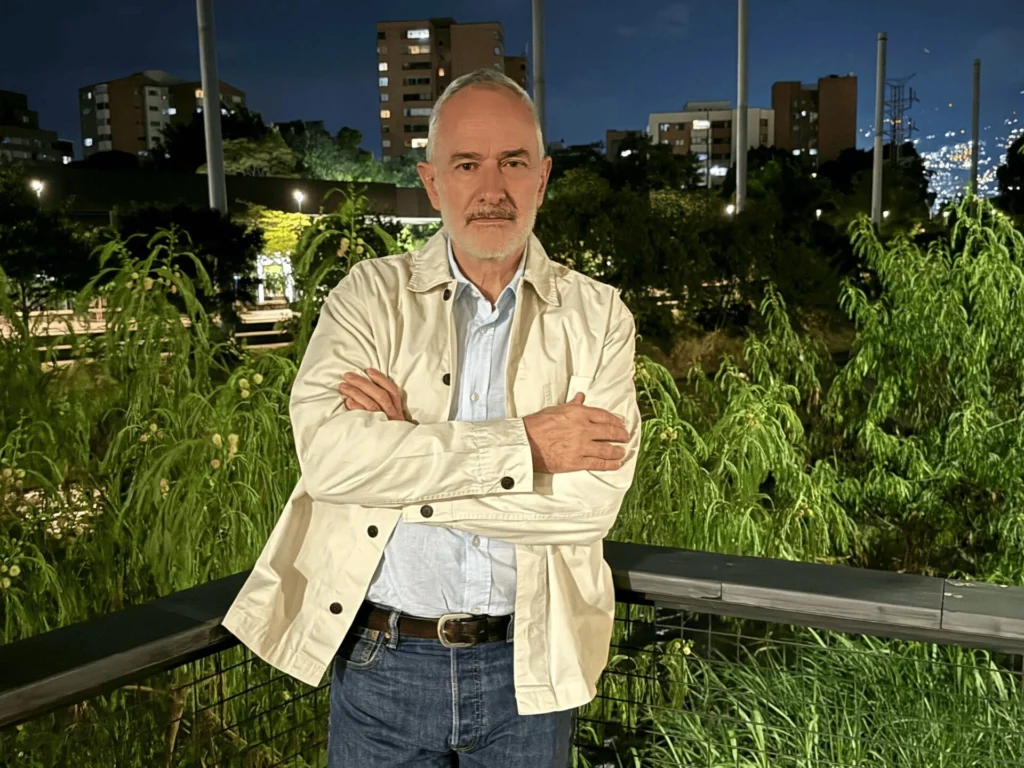
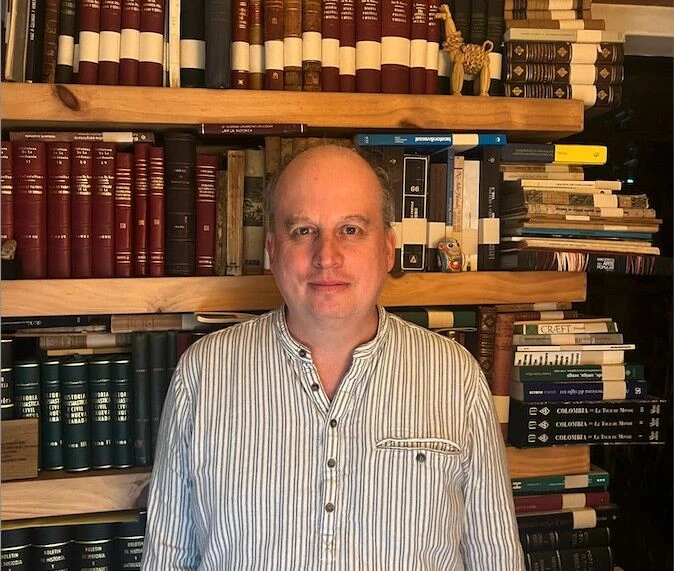
Research team photo, accompanied by José Fernando Serrano, director of the Department of Anthropology at Universidad de los Andes.
We are an interdisciplinary team from the University of Zurich, Universidad de los Andes, Universidad Javeriana, University of Cambridge, independent researchers, and university students.
We aim to study and analyze the colonial block interior, or “common,” found at El Boga, drawing on distinct lines of evidence recovered from excavations, archaeological contexts preserved on site, and documentary and ethnographic information.
The team is composed of individuals with expertise in Philosophy, History, Cultural Heritage, Anthropology, and Archaeology, accompanied by doctoral and undergraduate students who have been involved in different stages of the research.
Would you like to get to know more about the research team? Meet them below.
Numerous members of the Mompox community and surrounding municipalities have contributed significantly to the research process, as have students from various educational institutions including schools, universities, and institutes. Below, we acknowledge those who have collaborated on the project through the following list:
Alicia Bonilla Mendieta Ana María Carvajal Chávez Andrés Camilo Rodríguez Asmeido Guerra Atanael José Hurtado Carmen Cenia Corrales Catalina Pabón León Cruz María Campos Dager Castrillo Daniel Andrés Solano Cañón Daniela Velandia Anzola Dayana Andrea Amaya Diaz
Esteban Cifuentes Bonilla Gabriela Cotrino Gallego Isabel Cristina Figueredo Buitrago Jaime Orlando Arenilla Javier Felipe Booder Libreros Juan Diego Cadena Villamizar Juan Ignacio Acuña Torrente Juan Sebastián Muñoz Laura Catalina Cárdenas Liliana María Beleño Marcia Angely Ortiz Carrascal María Gabriela Cotrino Gallego
María Alejandra Patiño Maria Paula Vargas Ulloa Mariana Alzate Infante Mariana Luna Corredor Mariana Sánchez Pardo Mateo González Goyeneche Miguel Ramírez Sofia Palacio Ostos Sofia Prada Uribe Tatiana Suaza Varela Veronica Barreto Paredes
Elizabeth Ramos
(Universidad de los Andes, Colombia)
PhD in Archaeology. Adjunct professor in the Department of Anthropology at Universidad de los Andes. Her research interests include the economic and social dimensions of food from pre-Hispanic times to the present, and the application of bioanthropological and zooarchaeological studies to contemporary issues related to culinary cultural heritage and biodiversity conservation.
Francis Cheneval
(University of Zurich, Switzerland)
Francis Cheneval studied Philosophy and Political Science at the Universities of Fribourg (Switzerland) and Georgetown (USA). He has taught and conducted research at the École Pratique des Hautes Études (Paris), Universidad de los Andes (Bogotá), the University of Oxford, the University of Nantes, and the Université Libre de Bruxelles, among others. From 2006 to 2008 he served as rapporteur on property rights for the Commission on Legal Empowerment of the Poor (UNDP, New York). Since 2011 he has been a full professor of political philosophy at the University of Zurich. He publishes on various topics in political philosophy and its history, with a focus on democratic theory, international relations, and property rights.
Santiago Gutiérrez Ferro
(Universidad de los Andes, Colombia)
Historian and anthropologist with experience in research and university teaching in the areas of zooarchaeology and social studies of food. His interests include the archaeological and historical analysis of interactions between human groups, fauna, and the environment in the Colombian Caribbean. His research trajectory has focused on zooarchaeological analyses, particularly of fish, as well as the review of documentary sources. He has participated in archaeological projects in Colombia and Mexico.
Juan Luís Isaza
He is a Colombian architect with an extensive and distinguished career in the fields of conservation, preservation, and safeguarding of cultural heritage, with more than thirty years of uninterrupted specialized experience. He has served, among other roles, as National Director of Cultural Heritage and as a consultant for ICOMOS and UNESCO on matters related to the implementation of the Convention Concerning the Protection of the World Cultural and Natural Heritage (UNESCO, 1972).
Alberto Escovar
Architect from Universidad de los Andes (1991), with a master’s degree in Art, Museums, and Heritage Management from Universidad Pablo de Olavide (2024) in Seville (Spain), and currently in the second year of the doctoral program in History and Humanistic Studies at the same university. He served as director of the Escuela Taller de Bogotá (2006–2014), Director of Heritage and Memory at the Ministry of Culture (2015–2022), and since October 2025 has been director of the Museo del Oro in Bogotá.
Jimena Lobo Guerrero
(Cambridge University, United Kingdom)
Anthropologist and historian, Master in History and PhD in Archaeology and Anthropology from the University of Bristol. She is senior curator of world archaeology at the Museum of Archaeology and Anthropology at the University of Cambridge. She served as director of the Casa del Alabado, a pre-Columbian art museum in Ecuador, where she led the curation of the permanent exhibition. She also worked at the Museo del Oro in Colombia and has been a professor at Universidad de Caldas (Colombia).
Andrés Sarabia
He works in feminist political ecology, an interdisciplinary field where his studies in economics (Universidad de los Andes), development (Erasmus Universiteit Rotterdam), and gender (Central European University) converge. He has taught in various areas (anthropology, political science, economics, gender studies, critical development studies) at Central European University (Vienna, Budapest), Bard College (Jerusalem), and the International Institute of Social Studies (The Hague). Drawing on critical environmental and gender perspectives, he is interested in the collaborative design of public advocacy projects aimed at producing strategies through a differential and intersectional lens.
Catalina Rivera
PhD in Anthropology, Master in Anthropology, and Attorney from the Pontificia Universidad Javeriana. She served as Coordinator of the Legal Clinic on Law and Territory, and as Coordinator and full professor in the Department of Philosophy and History of Law between 2012 and 2018. She has been an advisor for the Centro de Investigación y Educación Popular (Cinep), advisor for the Magdalena Medio Development and Peace Program, and advisor for the Victims’ Unit.
Luis Gonzalo Jaramillo
(Universidad de los Andes, Colombia)
PhD in Archaeology. Associate Researcher at Universidad de los Andes. Manager and Coordinator of the Observatory of Cultural and Archaeological Heritage OPCA (https://cienciassociales.uniandes.edu.co/opca/). He researches the emergence and development of complex societies, particularly in the Upper Magdalena region (Augustinian Culture), the middle Cauca River valley (Quimbaya Zone), the Cundiboyacense highlands (Muisca Zone), and the Momposina Depression, applying systematic regional methodologies and household-scale investigations.
Felipe Gaitán Ammann
(Universidad de los Andes, Colombia)
PhD in Anthropology. His research has focused on the urbanization and modernization processes of cities such as Bogotá, Cartagena de Indias, and Panamá la Vieja, and on the materiality of the slave trade in the Atlantic world during the seventeenth century. He has taught and lectured at international universities including Columbia University, Brown University, and The University of Chicago.